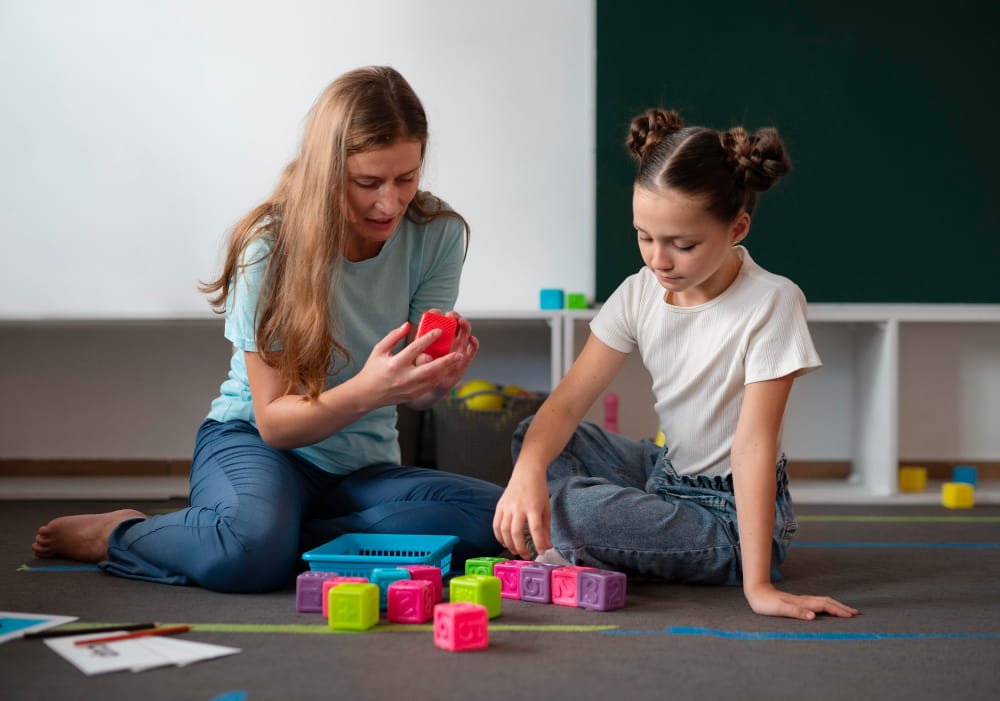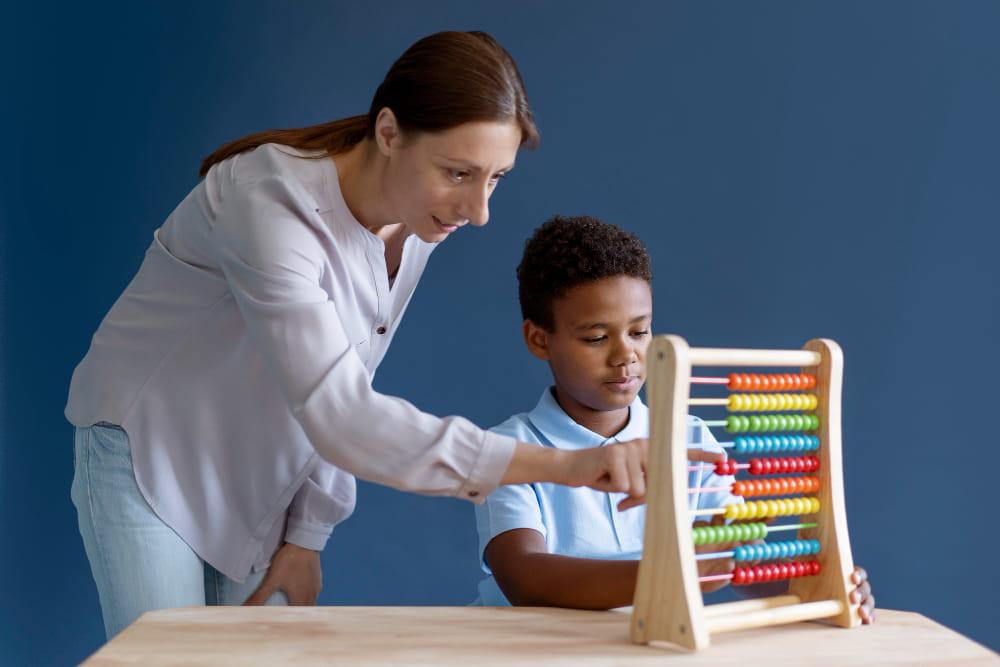

Occupational Therapy (OT) helps children build the physical, sensory, and self-care skills needed for independence in everyday life. This includes fine motor skills (like handwriting and using utensils), sensory processing (how a child responds to sounds, textures, and movement), and self-care skills (like dressing and grooming). Occupational Therapists assess how a child’s body and brain process information and movement, then design activities that build skills in an engaging, supportive way.
At BFC, Occupational Therapy is part of our integrated Group Practice, meaning sensory and motor insights identified by our OTs directly inform the strategies used by our ABA and Speech teams. This collaborative approach ensures that a sensory trigger affecting behavior, or a motor challenge affecting communication tools, is addressed as part of the bigger picture — not treated as a separate, unrelated issue.
BFC’s Occupational Therapists are skilled at translating clinical assessments into practical, real-life progress — focusing not just on isolated skills, but on how those skills support genuine independence at home and school. As part of our Group Practice, our OTs share insights directly with the ABA and Speech teams, ensuring that sensory and motor needs are factored into the full treatment plan rather than treated separately. This coordinated approach allows BFC to address root causes — like sensory overload — rather than just the behaviors or communication struggles that result from them.